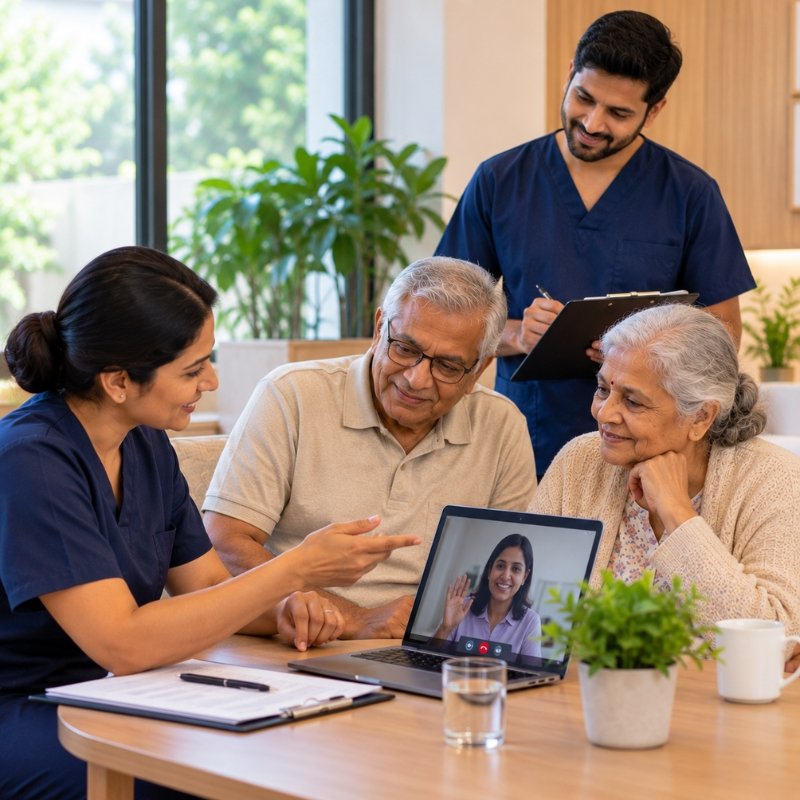
Families are not visitors to the care journey at Eira — they are active partners in it.
Eira Integrated Care Center treats the family as an essential partner in the patient's rehabilitation, geriatric, palliative and end-of-life care journey. Family participation is incorporated into the care plan according to the patient's preferences, clinical needs, family capacity and goals of care. Person- and family-centred care is based on active partnership between patients, families and healthcare professionals.
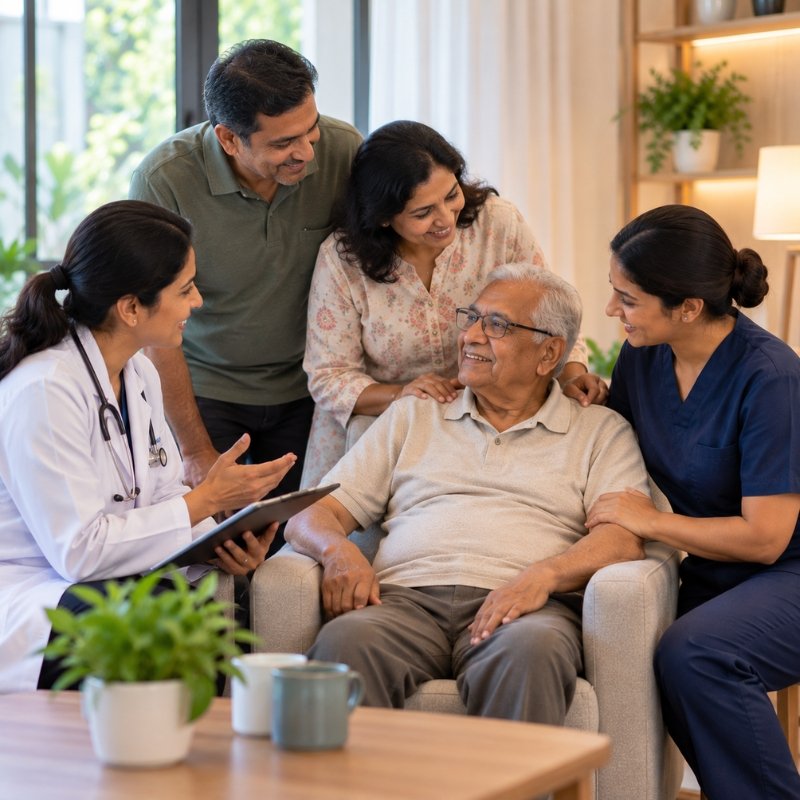
Families are invited to contribute to the initial assessment and care-planning process. Their knowledge of the patient's routines, personality, preferences, communication style, medical history and functional abilities helps Eira develop a more personalized plan. Family members may participate in:
The patient's consent, privacy and right to make decisions remain central to all discussions. Shared decisions, preferences, risks, benefits and treatment goals are clearly documented in the care record.
Eira provides practical education to help families participate safely and confidently in care. Depending on the patient's needs, training may cover:
Education is reinforced through demonstrations, supervised practice, written instructions and opportunities for questions.
Families receive regular updates regarding the patient's medical condition, nursing needs, therapy participation, functional progress, nutrition, mood and emerging concerns. A designated Eira team member can serve as the family's primary point of contact, helping maintain consistent communication.
Where family members cannot visit regularly, updates may be coordinated through telephone or video communication, subject to patient consent and appropriate confidentiality safeguards. Regular check-ins and two-way communication allow concerns to be identified early and care plans to be adjusted.
Families are encouraged to participate in suitable aspects of daily care and rehabilitation, adapted to the patient's energy, medical condition and safety requirements.
Cheering on progress during rehabilitation sessions.
Under professional guidance, between sessions.
Orientation and familiar routines that feel like home.
Or joining rehabilitation-kitchen activities.
Supporting functional activities day to day.
Music, photographs or personal items from home.
Maintaining social and emotional bonds throughout care.
Families are never expected to replace trained staff — only to contribute in ways that are safe, practical and emotionally appropriate.
Speak with our care coordination team about how your family can be part of your loved one's care plan.